Tanger Med Strengthens Its Commitment to Sustainable and Smart Ports alongside UNCTAD

25 November 2025

Digitalization

Tangier, Morocco
As ports play an increasing role in the energy transition, stakeholders from across Tanger Med Group and the wider port ecosystem met in Tangier to share and learn from experiences promoting low-carbon, energy-efficient port operations.

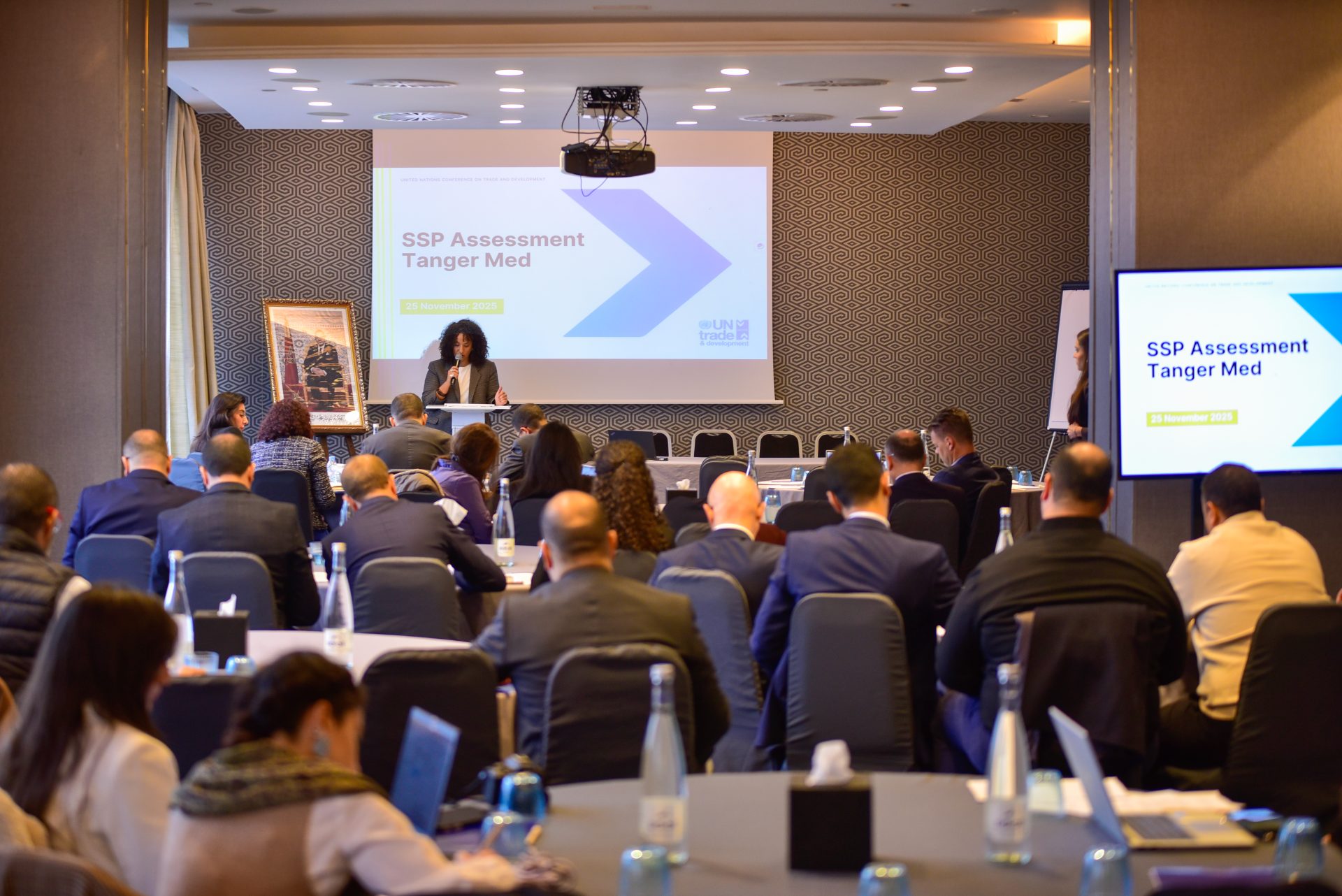
Organized by the United Nations Trade and Development (UNCTAD) in partnership with Tanger Med, the event forms part of the Sustainable Smart Ports (SSP) for Africa initiative, which also engages ports in Ghana and Mauritius. The initiative supports ports in advancing the energy transition by scaling up renewable energy, improving energy efficiency and reducing emissions across port operations.

A central feature of the workshop was the presentation by UNCTAD of the Sustainable Smart Port assessment for Tanger Med, a comprehensive review of the port’s current strategies and future pathways toward becoming an SSP. The assessment highlighted both achievements to date and areas for further action to accelerate the energy transition across the port’s operations.

The findings underscore the Group commitment to carbon neutrality by 2030, its increasing use of renewable energy, and its achievement of 100% green electricity sourcing by 2025. These measures not only align with Morocco’s national climate targets — including the goal of 52 % renewable energy in the electricity mix by 2030 — and the Paris Agreement but also serves to strengthen the port’s competitiveness.

From assessment to action

As part of next steps, participants were introduced to a follow-up Capacity Building Workshop on scaling up action, scheduled from 25 to 27 November 2025, held by UNCTAD. The workshop offered stakeholders practical tools to monitor and assess energy performance, electrify port equipment, and prepare for emerging industry shifts towards alternative fuels and low-carbon sources.

Bringing together representatives from terminal operators, shipping lines, institutions, and industry partners, the workshop provided a platform for knowledge exchange, peer learning and dialogue on practical solutions. Experts from the Ports of Antwerp-Bruges, Amsterdam, and Busan participated in person, sharing case studies on how they have electrified port equipment and implemented alternative fuel bunkering in practice. The International Energy Agency joined online, providing a strategic overview of global trends shaping the future of alternative fuels.

Share this post